|
Dental
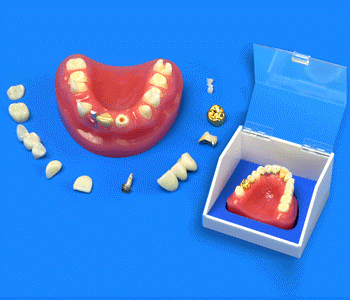
Educational Simulators, Manikins, Models
Caries: Panoramic radiographs
demonstrate the highest positive predictive value (PPV) for the
detection of caries in posterior teeth as compared to a full mouth
survey including bitewing radiographs.
Periodontal: PPVs for periodontal disease detection were
almost exactly equal between low-dose single panoramic and higher
dose full mouth survey. Bone loss:
Panoramic radiographs more often indicate more severe bone loss than
the periapical radiographs. Measurements of marginal bone loss made
from panoramic radiographs are the most accurate when compared to
truth. Periapical: Panoramic
radiographs were shown to be as effective as periapical radiographs
for the detection of lytic and sclerotic periapical disease.
Edentulous Patients Disease: Keur
(1986) recommended that a panoramic radiograph be taken on all new
edentulous patients. His study of 1,135 asymptomatic patients showed
34 percent had lesions that required surgical treatment. A further
29 percent had abnormalities that did not require surgical
intervention. The panoramic radiograph demonstrates structures such
as the ramus, TMJ, styloid process, styloid ligament, upper parts
of the maxillary antrum and lower orbit which are outside the
anatomical limits of a full mouth survey. Some indications in
panoramic radiographs should include: Hypodontia (congenitally
missing), embedded and impacted, apical condensing osteitis, apical
abscess and/or cysts, fibrous healing defects, apical resorption,
recurrent (secondary) caries, cemental caries, drift and migration,
attrition, regional odontodysplasia (ghost), dentinal dysplasia
(type 1 A, B & C), congenital syphilis (enamel hypoplasia),
taurodontism, mesiodens (supernumerary, supplemental and accessory),
external resorption, localized and generalized prepubertal
periodontitis, perio destructive process and many other types of
cysts, tumors and lessions. Disease Trends:
Panoramic carries about one tenth the risk of a full mouth in
terms of fatal malignant disease per million persons exposed. Risk
estimates of 13 to 18 fold exists between panoramic and full mouth
survey using long, round cone and E-speed film. The dentist
will become more adept at diagnosting problems in adjacent anatomic
regions such as the TMJ, salivary glands, styloid process, and
maxillary sinus. Ohba and colleagues (1990) noted that panoramic
radiography was the method of choice for the detection of problems
associated with the floor and posterior wall of the antrum. In our
aging population, the reasons for taking radiographs will shift away
from the detection of previously common diseases such as caries and
periodontal and periapical disease to include disorders that are
more occult, and more life-threatening diagnoses such as malignant
diseases within the jaws will be made. Additionally, the importance
of recognizing the radiologic manifestation of systemic and
metabolic diseases affecting the aging or aged such as osteoporosis
will have more significance to a greater number of practitioners
throughout the world.
All above
statements are based on material found in Diagnostic Imaging
of the Jaws by William and Wilkins, copyright 1995. Edited
by Langlais, Langland, and Nortj=e. ISBN:0-683-04809-0
There are
several factors that influence radiogrpahic image quality, which
may be shifting your opinion of the above statements. Panoramic
is much more sensitive to processing and dark room enviroments.
Patient positioning, machine calibration both mechanically and
electronically, film/screen combination and age, and view box
lighting, all effect diagnostic value. If your panoramic results
do not agree with the above statements, a service tech should be
contacted to evaluate the problem. Older obsolete models may
have non-repairable issues.
|